How long a garage floor coating lasts, and where it starts to go
Last updated: By EpoxyFloorIndex Research Team
The published numbers, and what they assume
GLI Epoxy Flooring reports that a properly installed epoxy floor lasts 10 to 20 years in a home and 5 to 15 years in a commercial or industrial setting, with traffic driving the difference. That is the figure most often quoted in this market and it is a reasonable place to start.
The load bearing words are properly installed. Every source that gives a lifespan for these systems attaches it to the preparation underneath. GLI Epoxy Flooring names surface preparation as the largest single cost variable in an epoxy job and warns that a quote under roughly $3 per square foot usually means thin material or no real diamond grinding. A floor that skipped the grinding is not a ten year floor that failed early. It was never in that band.
So the honest version of the answer is conditional. A system on a properly ground, dry, sound slab has a long published life. The same system on a slab that was etched instead of ground has a life measured in the way a paint job is measured, and no warranty language changes that.
Failure starts at the threshold, not in the middle
Coatings rarely wear out evenly. They go at the edges, and in a Toronto garage the edge that matters is the one under the door.
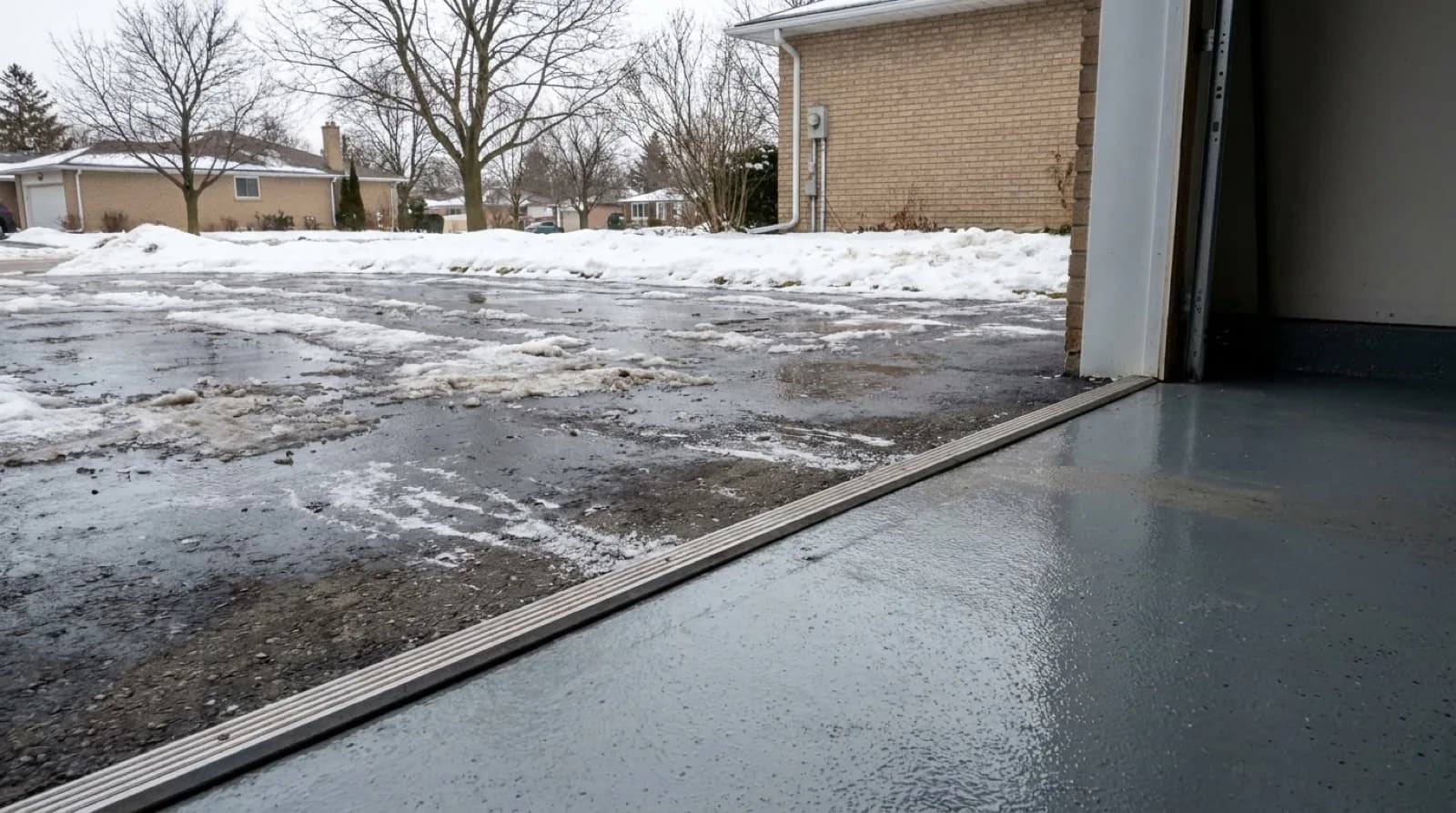
Polished Floors reports that in GTA installations, epoxy garage floors typically begin showing edge lift and chipping at the door threshold around year five to seven, while polyaspartic floors of the same age usually still look new. That threshold is where the car brings in snow, where the meltwater sits, and where the slab sees the sharpest temperature swing between the heated side and the outside.
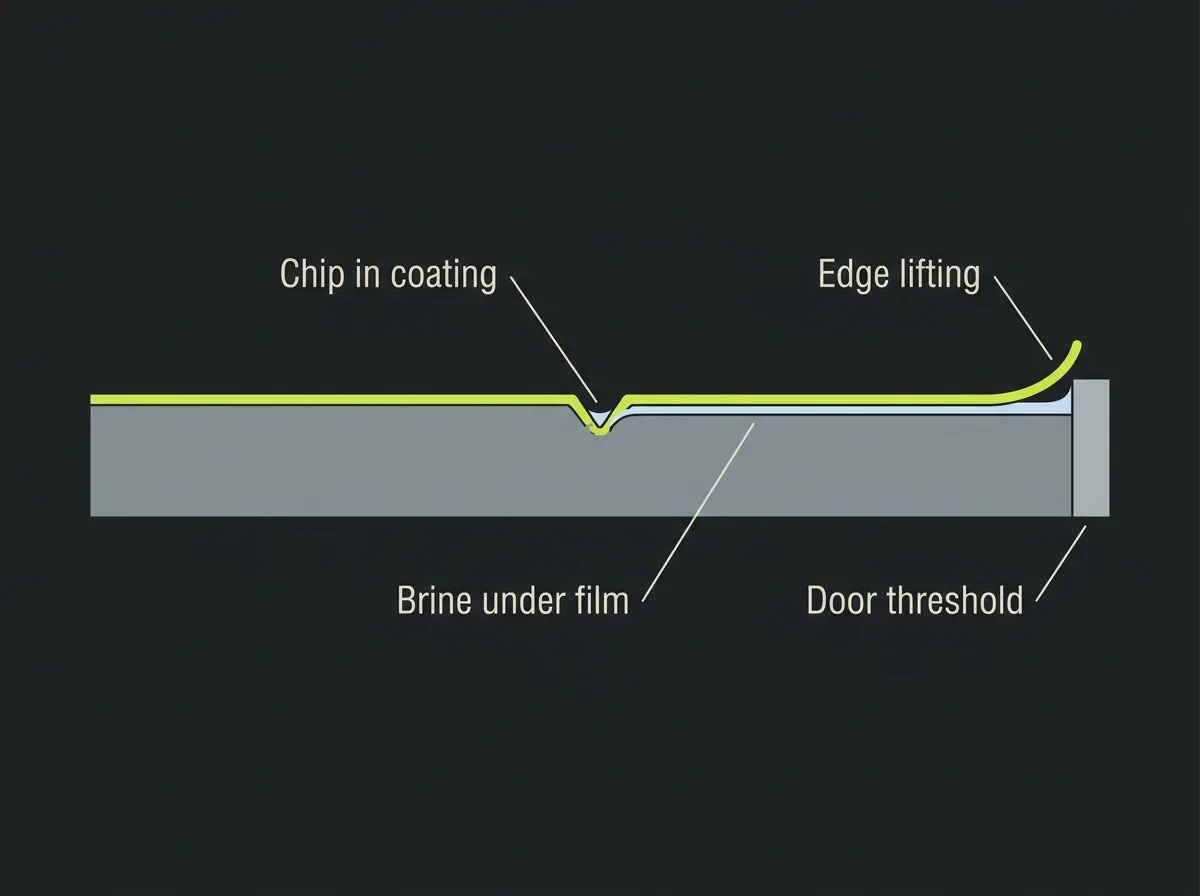
Salt is part of the story but not in the way people assume. Polished Floors states that polyaspartic is chemically inert to road salt, and that what actually happens is salt brine working into a chip or a poorly sealed expansion joint and lifting the coating from below. The coating does not dissolve. It gets undermined. Which means the maintenance that extends the life of a floor is not a special cleaner, it is fixing chips while they are still chips and keeping the joints sealed.
Sunlight is the other clock
The second thing that ages a coating is light, and here the chemistry genuinely differs rather than the workmanship.
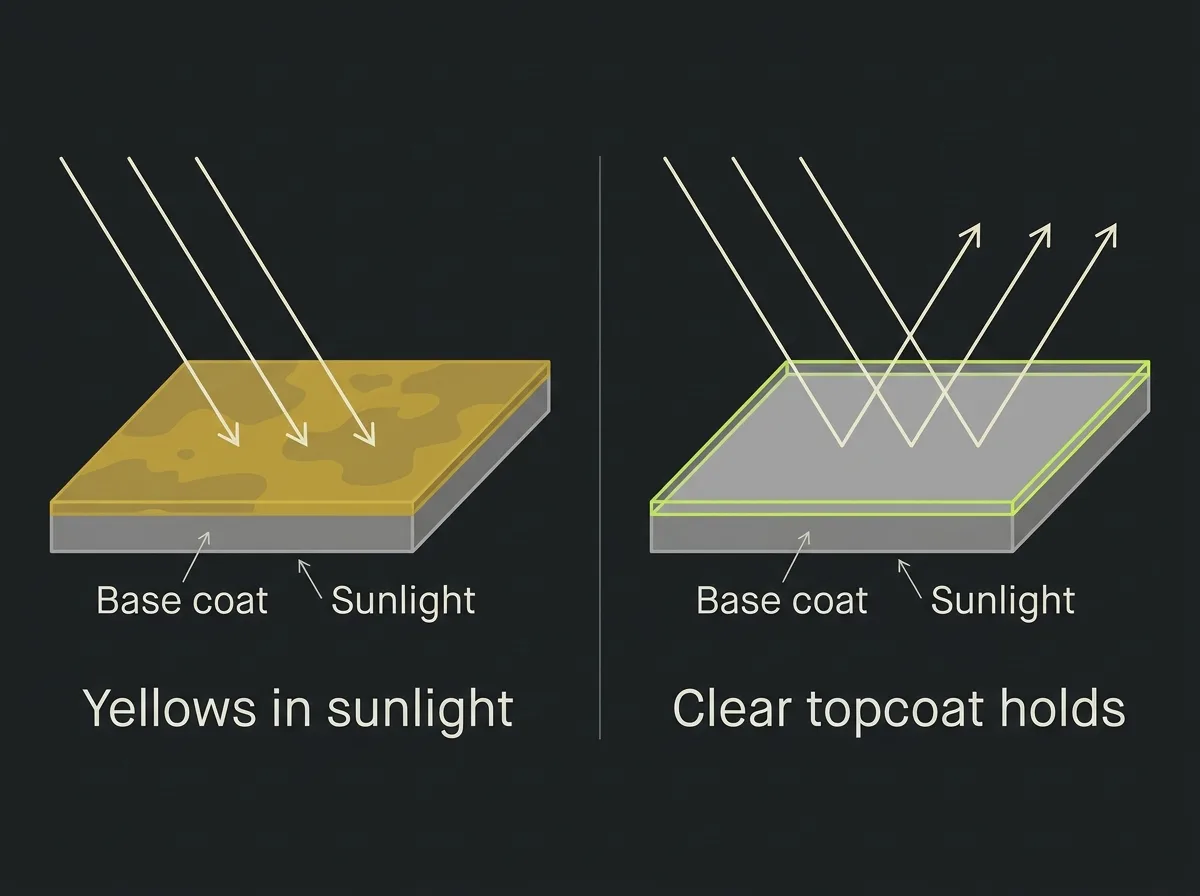
Polished Floors describes polyaspartic as aliphatic, which stays clear and UV stable for the life of the floor, and epoxy as aromatic, which can yellow. GLI Epoxy Flooring makes the same point about box store kits, which it says yellow in sunlight as well as bonding weakly. A garage with a door that faces the afternoon sun, or a room with big windows, will show the difference sooner than a north facing one.
That yellowing is cosmetic rather than structural, and on a mid grey or flake floor it is far less visible than on a light solid colour. It matters most when the finish is the point, which is why decorative work tends toward systems with a UV stable topcoat.
Polished Floors also names a middle route: an epoxy base coat with a polyaspartic clear topcoat, which it says solves the UV yellowing problem and can save $1,000 to $1,500 against a full polyaspartic system. That is the hybrid worth asking about when the quote for the fast system comes in higher than expected.
Recoat or remove
A floor showing its age has two futures, and there is a published threshold for choosing between them.
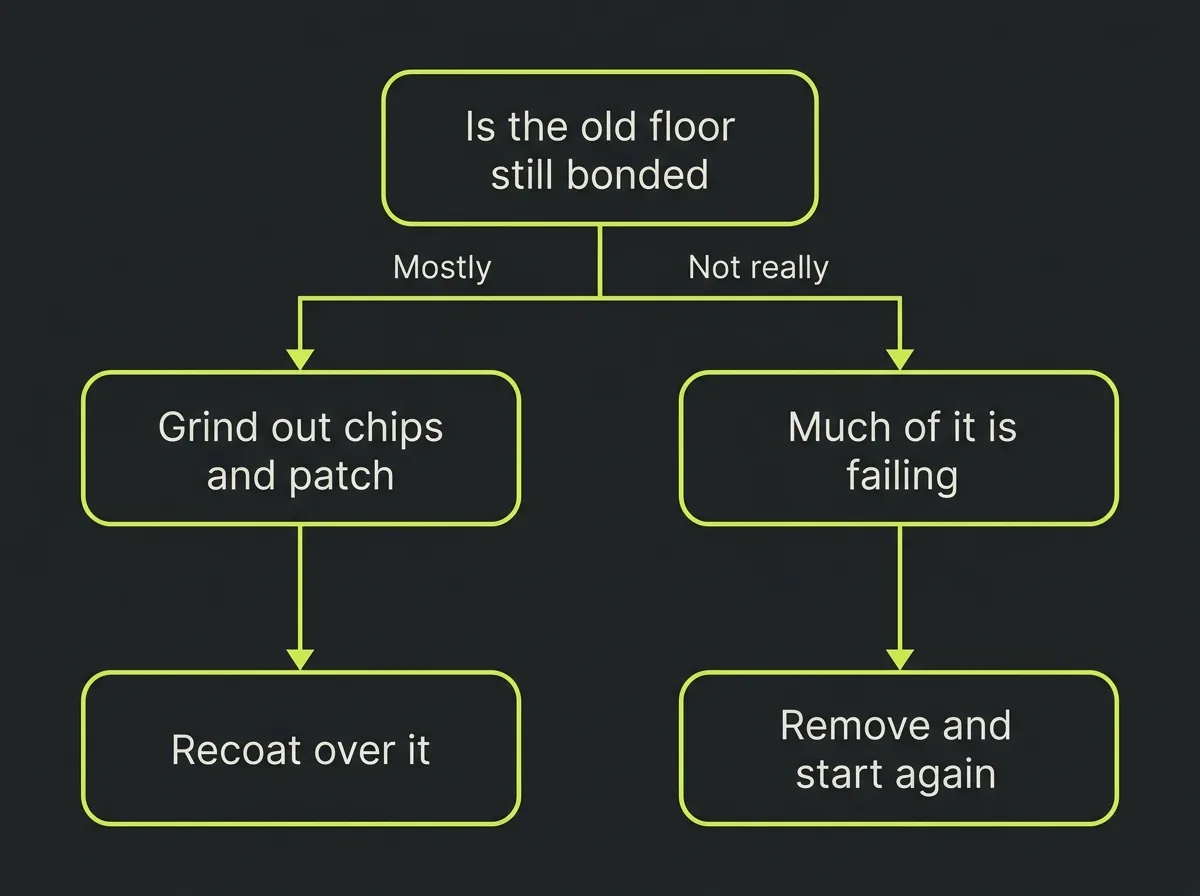
Polished Floors says polyaspartic can sometimes go over existing epoxy: if the epoxy is fully intact and well bonded, the surface can be sanded for adhesion, with any chips or lifted edges ground out and patched first. If more than 10 percent of the existing epoxy is failing, full removal is the better call.
That 10 percent is a useful line because it is checkable. Walk the floor, look at the threshold, the joints and anywhere a vehicle turns, and form a view about how much of it is loose rather than just tired. A contractor who wants to go straight over a floor that is lifting in patches is selling you the same failure again with a new topcoat on it.
Removal is the expensive branch. GLI Epoxy Flooring prices redoing a failed coating professionally, with proper removal and grinding, at about $2,800 to $3,200 for a double garage before the new system goes down, which is why catching a floor at the recoat stage rather than the removal stage is worth a yearly look.
What a warranty is worth reading for
Polished Floors gives concrete guidance for a residential install in the GTA: look for a minimum of 10 years on polyaspartic and 5 years on epoxy, and be wary of anything advertised as lifetime without a clear written list of what is covered.
That last clause is the whole point. A warranty on a floor coating is only meaningful if it names the failure modes it covers. Delamination from the slab is the one that costs real money, and it is also the one most tied to preparation, which is the contractor's work rather than the manufacturer's product. A document that covers the material against manufacturing defects and says nothing about adhesion has transferred all of the risk that matters back to you.
So read for three things. What failure is covered, who performs the remedy, and what voids it. Then ask whether the same document covers the preparation, because that is where the ten to twenty year figure comes from in the first place.
What this index does not know about durability
It is worth being direct about the limits here. This site lists 221 floor coating companies in the Greater Toronto Area, and 173 of them carry a rating backed by at least three reviews, averaging 4.87 out of 5 with 83.2 percent sitting at 4.8 or higher.
That is a rating of a customer experience at the time it was written, usually shortly after the work. It is not a durability record. Nothing in a public business listing says how a company's floors look in year seven, which is exactly the year the published sources say matters. No directory has that data, including this one, and a five star average across a market where 83.2 percent of rated companies sit above 4.8 is not a way to tell them apart on longevity.
What you can do is ask each contractor for an address of a garage they coated at least five years ago, and go and look at the threshold. That single question puts you in front of the only evidence that answers the durability question, and no listing, review or warranty document substitutes for it.
Frequently asked questions
How long does an epoxy garage floor last in Toronto?
- GLI Epoxy Flooring reports 10 to 20 years in a home and 5 to 15 years in a commercial or industrial setting for a properly installed epoxy floor, with traffic driving the difference. That figure assumes real surface preparation. The same source warns that a quote under roughly $3 per square foot usually means thin material or no diamond grinding, and a floor like that is not in the published band at all.
Where does a garage floor coating usually fail first?
- At the door threshold. Polished Floors reports that GTA epoxy garage floors typically show edge lift and chipping there around year five to seven, while polyaspartic floors of the same age usually still look new. That strip sees meltwater, salt and the sharpest temperature swing on the floor, so it is the first place worth checking each spring.
Does road salt destroy a floor coating?
- Not directly, according to Polished Floors, which describes polyaspartic as chemically inert to road salt. The failure it names is mechanical: brine works into a chip or a poorly sealed expansion joint and lifts the coating from below. Keeping the film intact and the joints sealed matters more than what you wash the floor with.
Can a new coating go over an old one?
- Sometimes. Polished Floors says polyaspartic can go over epoxy that is fully intact and well bonded, with the surface sanded for adhesion and any chips or lifted edges ground out and patched first. If more than 10 percent of the existing coating is failing, the same source says full removal is the better call.
What should a garage floor coating warranty cover?
- Polished Floors suggests a minimum of 10 years on polyaspartic and 5 years on epoxy for a residential GTA install, and advises caution about anything advertised as lifetime without a written list of what is covered. Read for the failure that costs money, which is the coating letting go of the slab, and check whether the document covers preparation or only the material.
Where these figures come from
- A properly installed epoxy floor is reported to last 10 to 20 years in a home and 5 to 15 years in commercial or industrial settings, depending on traffic.GLI Epoxy Flooring: Epoxy Flooring Cost Toronto (Pricing Guide)
- In GTA installations, epoxy garage floors typically show edge lift and chipping at the door threshold around year five to seven, while polyaspartic floors of the same age usually still look new.Polished Floors: Garage Epoxy vs Polyaspartic in Toronto Winters (2026)
- Polyaspartic is chemically inert to road salt; the failure mode is brine entering a chip or an unsealed expansion joint and lifting the coating from below. Where more than 10 percent of an existing epoxy floor is failing, full removal is recommended over a recoat.Polished Floors: Garage Epoxy vs Polyaspartic in Toronto Winters (2026)
- Warranty guidance for a residential GTA install is a minimum of 10 years on polyaspartic and 5 years on epoxy, with caution advised on anything advertised as lifetime without a written list of what is covered.Polished Floors: Garage Epoxy vs Polyaspartic in Toronto Winters (2026)
- Of the 221 companies in this index, 173 carry a rating backed by at least three reviews. Those 173 average 4.87 out of 5, and 83.2 percent of them sit at 4.8 or higher. Counted from this site's own dataset.epoxyfloorindex dataset, 221 Greater Toronto Area floor coating companies