Reading a commercial floor coating quote in the GTA, where the rate depends on the shutdown
Last updated: By EpoxyFloorIndex Research Team
The rate is a function of the scope, and the scope is enormous
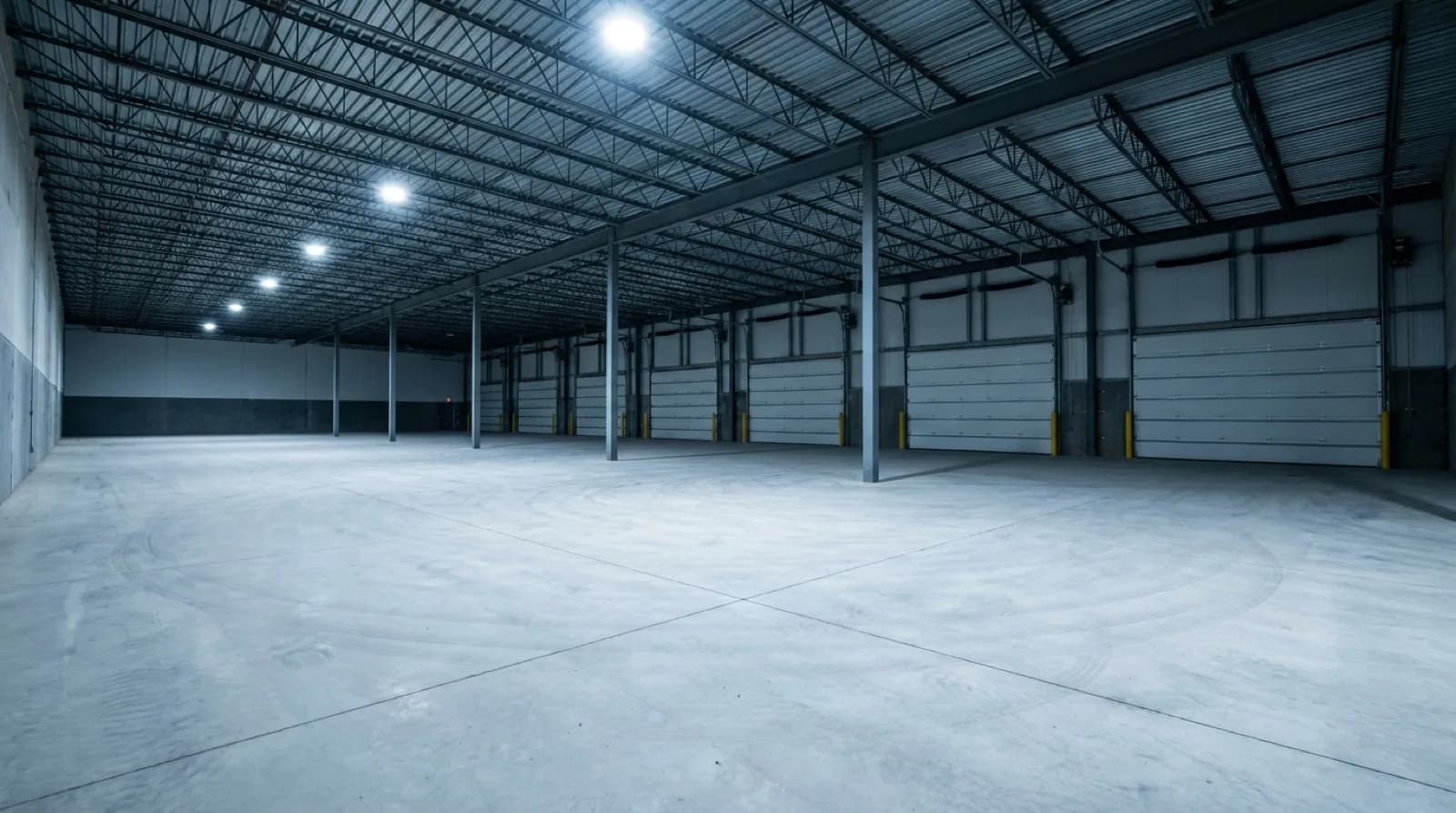
Commercial coating prices look chaotic until you notice how much ground the word commercial covers. A 100,000 square foot warehouse with a single unbroken slab and a crew mobilised for a week is a different trade from a 900 square foot restaurant kitchen with drains, curbs, coving and a health inspection at the end. Both are commercial, and both are quoted per square foot, which is why the two numbers look like a contradiction.
The published band shows it. GLI Epoxy Flooring lists commercial epoxy flooring in Toronto at $7 to $12 per square foot for most spaces, and heavy industrial systems that resist chemicals or are built up thick at $10 to $15. Armour Guard lists commercial and industrial epoxy in Toronto at $8 to $15. Canadian Concrete Surfaces lists commercial epoxy resin flooring across Ontario at $5 to $12, heavy duty industrial coatings at $8 to $15, and seamless antimicrobial systems for food and pharmaceutical spaces at $10 to $18.
At the other end, Toronto Epoxy Pros states that its industrial epoxy floor application typically starts at $3.00 per square foot, Surface Coating Experts starts industrial and commercial epoxy and urethane at $1.50 per square foot for large scale coverage, and Epoxy Flooring Toronto puts a large industrial job over 5,000 square feet at $4 to $7 per square foot. Those are entry points for wide open floors, not blended averages, and holding them next to a $12 figure for a finished retail space compares two different jobs.
Size is the one variable everybody agrees on
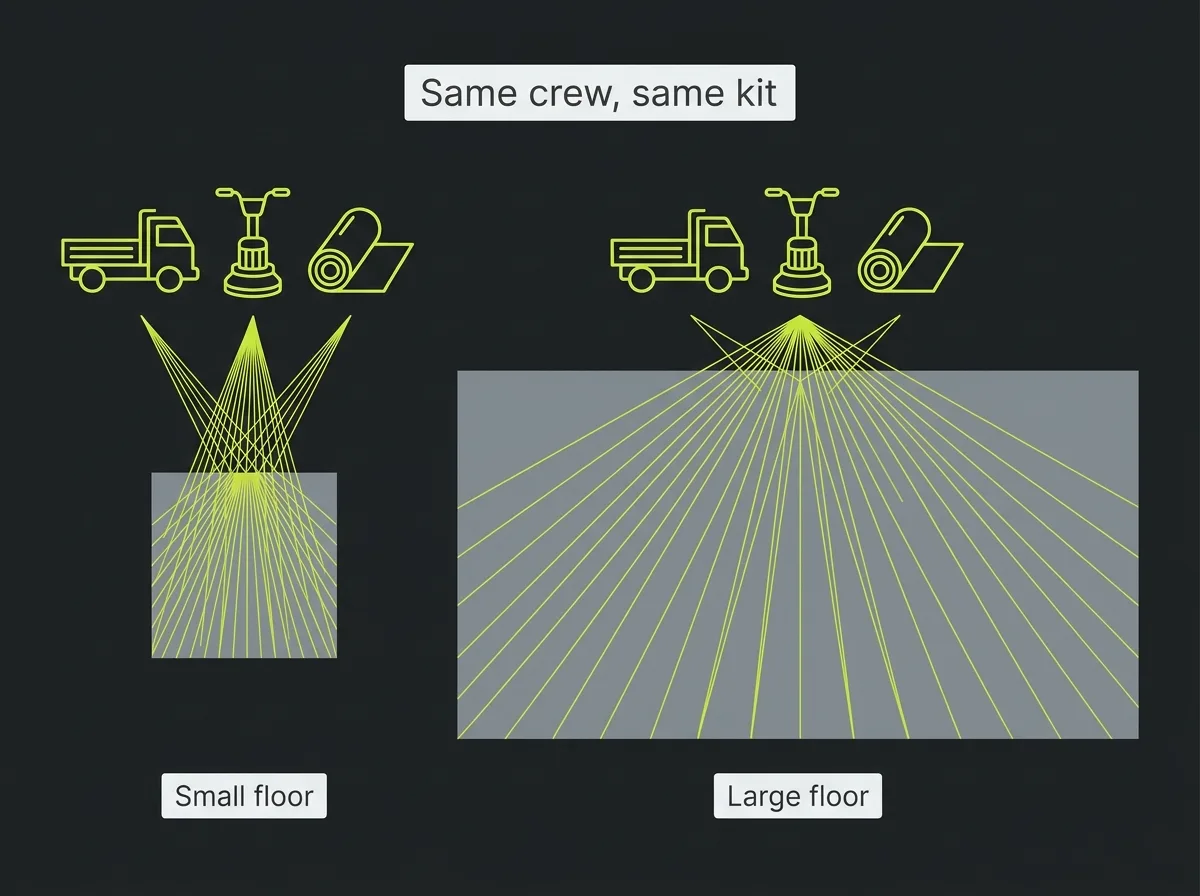
Mobilisation, equipment and travel are largely fixed. A crew that grinds 900 square feet pays for the same shot blaster, the same containment and the same trip as a crew that grinds 9,000, so the fixed part of the bill spreads thinner as the floor gets bigger. GLI Epoxy Flooring and Epoxy Flooring Toronto both describe that effect in prose.
Sealcon Floor Coatings puts a threshold on it. It prices commercial jobs over 1,500 square feet at $1.99 to $8.99 per square foot before tax, and residential garage epoxy at $5.99 to $12.99 per square foot before tax, and says outright that the larger commercial footprints benefit from economies of scale. The practical consequence is that a small commercial floor prices like a residential one no matter what the sign on the door says. If your space is under that threshold, quotes in the residential band are not a mistake.
The same logic runs the other way when you are planning. If there is a second room, a mezzanine or a back corridor that will be coated eventually, pricing it into the same mobilisation is usually cheaper than booking it as its own job later.
The shutdown is priced even when it is not on the quote
A garage can be out of use for a week and nobody loses money. A commercial floor usually cannot, and how you solve that is one of the larger hidden variables in the price.
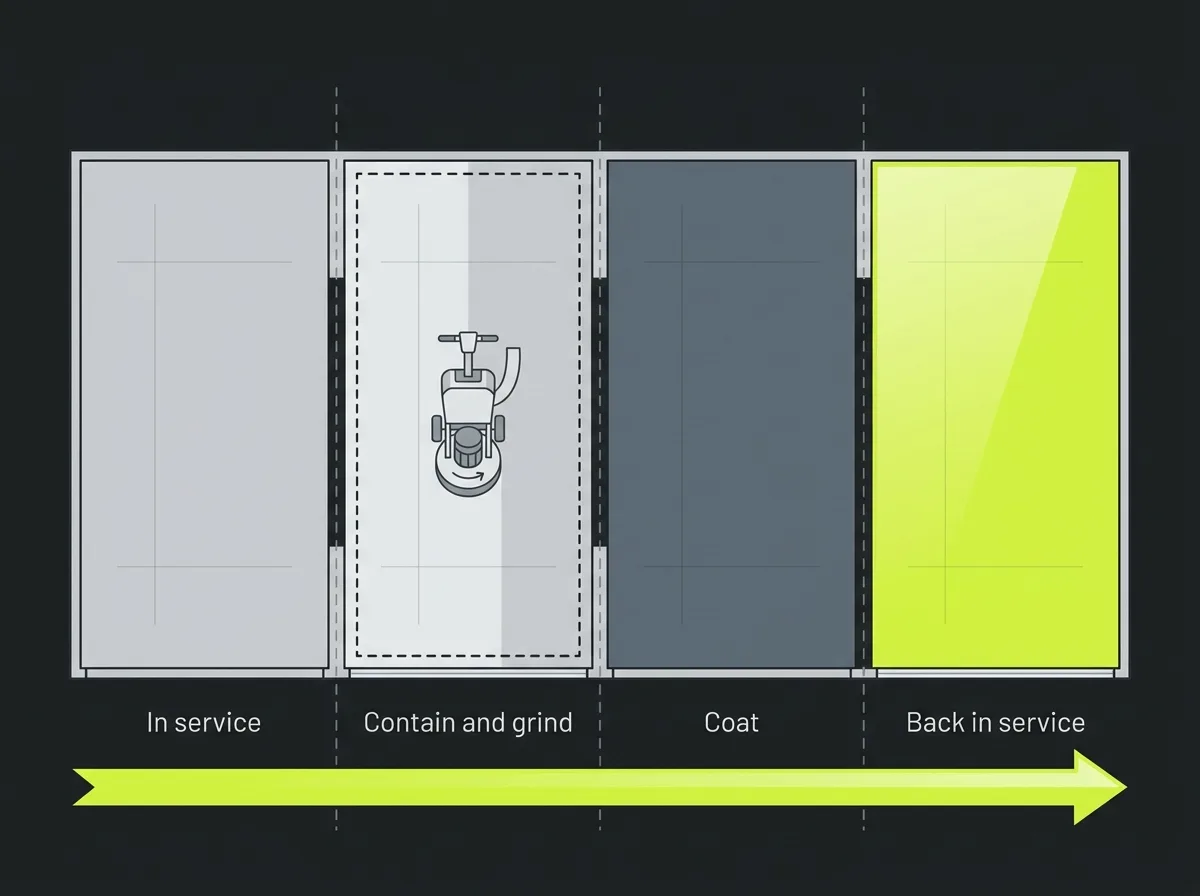
GLI Epoxy Flooring names phased or after hours installation, done so the business can keep running, as a scheduling complexity that contractors build into their quotes. In practice that means the floor gets split into sections, the crew works nights or weekends, and each section has to be cut in, contained and cured while the rest of the space stays in service. Every one of those steps costs labour that a single continuous pour does not.
This is where cure speed stops being a technical detail and becomes the budget. A system that is walkable overnight lets a retail floor open in the morning. A system that needs several days does not, and the difference has to be paid for either in the coating rate or in the days the space is closed. Ask a contractor to quote both ways. The cheaper coating is not always the cheaper project.
What the space does decides the system
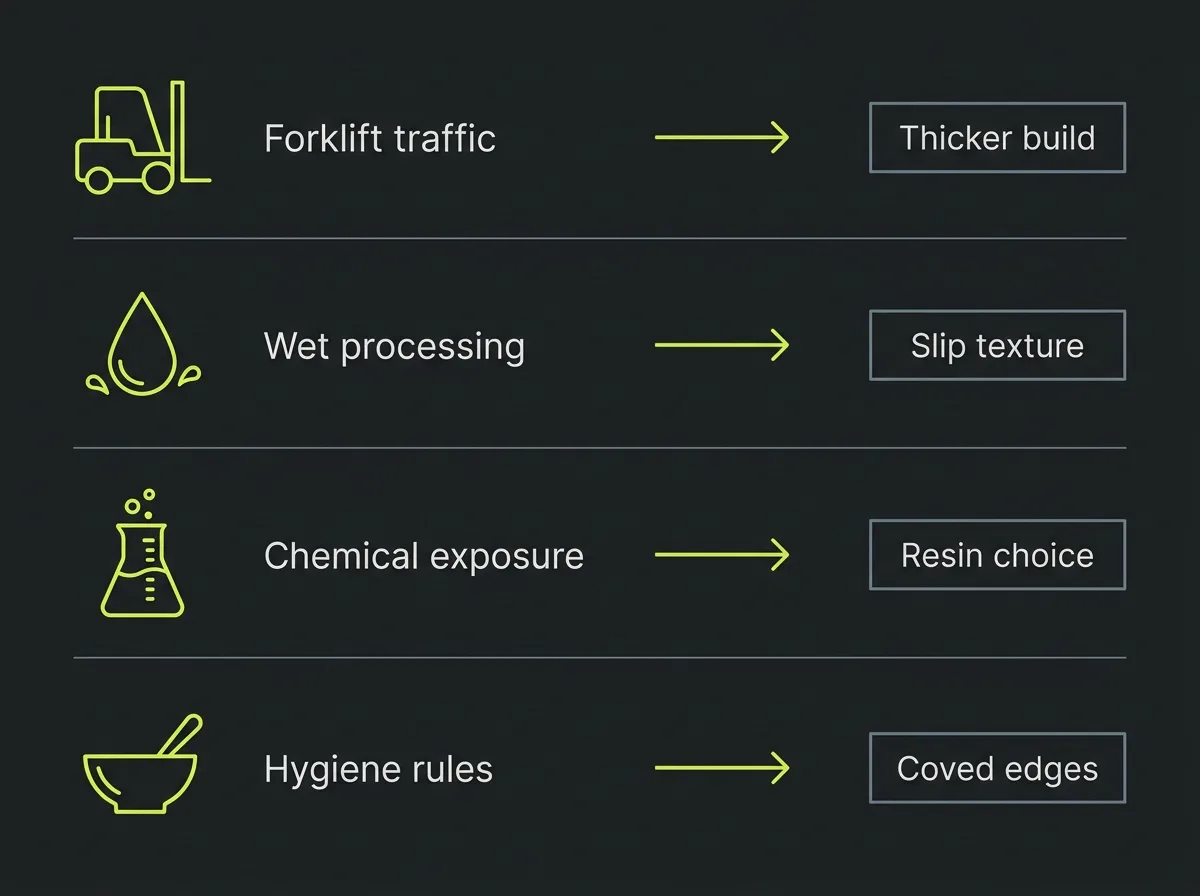
Above a certain level of demand, the choice stops being about looks. Canadian Concrete Surfaces prices seamless antimicrobial epoxy systems for food and pharmaceutical spaces at $10 to $18 per square foot and ties that figure directly to the hygiene standards those facilities work under. The same source puts chemical resistance, slip texture and antimicrobial requirements together as the reason a system moves into that band.
A commercial quote should therefore say what the floor is being asked to resist, not just what it will look like. Forklift traffic and point loading argue for a thicker build. Wet processing argues for slip texture and coving where the floor meets the wall. Cleaning chemicals and food acids argue for a specific resin, not for whatever the crew has on the truck.
Toroo Epoxy Coatings publishes project totals by space type that are useful as a reality check: a retail store floor at $3,000 to $12,000 or more, a restaurant kitchen at $2,500 to $8,000, a warehouse at $8,000 to $50,000 or more, and a factory or industrial facility from $15,000 to $100,000 or more. Those are wide because the categories are wide, but they tell you which order of magnitude you are in before the first site visit.
Check the rate against a whole project, then add the tax
The cheapest check available is to take the rate you were quoted, multiply it by your own floor area, and hold the result next to a published project total for a comparable space.
GLI Epoxy Flooring lists a 2,000 square foot Toronto commercial retail floor at $14,000 to $24,000, and notes that warehouses needing anti static coatings sit at the upper end of the commercial range. If a quoted rate times your area lands well below that, the difference is a line item somewhere, and it is worth finding out which one before you decide you got a deal.
Then add the tax. HST applies at 13 percent to commercial coating work performed in Ontario, and at least one GTA contractor publishes its per square foot band explicitly before tax. On a warehouse floor that is not a rounding error.
How thin the commercial shortlist actually is
This site lists 221 floor coating companies across the Greater Toronto Area, and 207 of them are recorded in the epoxy and garage floor coating category. Only 4 carry enough commercial and industrial signal to be recorded in the commercial and industrial category. All 4 publish a website.
That number is a statement about what these companies say about themselves in public, not a verdict on capability. A residential crew with a shot blaster and a night shift may be perfectly able to coat a small warehouse, and a company that never uses the word industrial on its site may have spent twenty years in one. What the number does tell you is that if you search this market the way a homeowner searches it, almost everything you find is set up to talk about garages.
So ask commercial questions early. What is the largest single floor you have coated, who supplied the system, how do you handle containment while the building stays open, and can you quote both a fast cure and a standard cure for the same scope. None of that is in a directory listing, including this one, and all of it changes the number at the bottom of the page.
Frequently asked questions
How much does commercial epoxy flooring cost per square foot in the GTA?
- GLI Epoxy Flooring prices commercial epoxy in Toronto at $7 to $12 per square foot for most spaces and $10 to $15 for heavy industrial systems. Armour Guard prices commercial and industrial epoxy at $8 to $15, and Canadian Concrete Surfaces prices commercial epoxy resin flooring across Ontario at $5 to $12. Large open industrial floors are quoted lower, starting at $3.00 per square foot according to Toronto Epoxy Pros.
Why is commercial epoxy cheaper per square foot than a residential garage?
- Because of the footprint, not the material. Sealcon Floor Coatings prices commercial jobs over 1,500 square feet at $1.99 to $8.99 per square foot before tax against $5.99 to $12.99 before tax for a residential garage, and attributes the difference to economies of scale. Mobilisation, equipment and travel are largely fixed, so they spread thinner over a bigger floor.
What does a food grade or pharmaceutical grade floor cost in Ontario?
- Canadian Concrete Surfaces prices seamless antimicrobial epoxy systems for food and healthcare facilities at $10 to $18 per square foot, and links that band to the hygiene standards those spaces work under. Expect coving where the floor meets the wall, slip texture and a specified resin rather than a general purpose one, all of which add labour as well as material.
How much does it cost to coat a warehouse floor in Toronto?
- Toronto Epoxy Pros says industrial epoxy application typically starts at $3.00 per square foot. Toroo Epoxy Coatings publishes a project total range of $8,000 to $50,000 or more for a warehouse floor and $15,000 to $100,000 or more for a factory or industrial facility. Epoxy Flooring Toronto puts a large industrial job over 5,000 square feet at $4 to $7 per square foot.
Does the quote include the cost of staying open during the work?
- Only if it says so. GLI Epoxy Flooring names phased and after hours installation as a scheduling complexity contractors build into their quotes. Ask for the work to be quoted both as a single continuous shutdown and as a phased install, because a faster curing system that costs more per square foot can still be the cheaper project once lost trading days are counted.
Where these figures come from
- Toronto commercial epoxy is priced at $7 to $12 per square foot for most spaces and $10 to $15 for heavy industrial systems, and a 2,000 square foot retail floor at $14,000 to $24,000.GLI Epoxy Flooring: Epoxy Flooring Cost Toronto (Pricing Guide)
- Commercial jobs over 1,500 square feet in the GTA are priced at $1.99 to $8.99 per square foot before tax, against $5.99 to $12.99 before tax for a residential garage, with the difference attributed to economies of scale.Sealcon Floor Coatings: Epoxy Flooring Cost per Square Foot (GTA)
- Ontario commercial epoxy resin flooring is priced at $5 to $12 per square foot, heavy duty industrial coatings at $8 to $15, and seamless antimicrobial systems for food and pharmaceutical spaces at $10 to $18.Canadian Concrete Surfaces: Epoxy Flooring Cost in Ontario (2025 Guide)
- Project totals by space type are published as $3,000 to $12,000 or more for a retail store, $2,500 to $8,000 for a restaurant kitchen, $8,000 to $50,000 or more for a warehouse and $15,000 to $100,000 or more for a factory.Toroo Epoxy Coatings: Epoxy Flooring Cost in Toronto (2026 Pricing Guide)
- Of the 221 companies in this index, 207 are recorded in the epoxy and garage floor coating category and only 4 in the commercial and industrial floor coating category, all 4 of which publish a website. Counted from this site's own dataset.epoxyfloorindex dataset, 221 Greater Toronto Area floor coating companies